Unlocking Efficiency: Exploring Python’s Map Function
Related Articles: Unlocking Efficiency: Exploring Python’s Map Function
Introduction
In this auspicious occasion, we are delighted to delve into the intriguing topic related to Unlocking Efficiency: Exploring Python’s Map Function. Let’s weave interesting information and offer fresh perspectives to the readers.
Table of Content
- 1 Related Articles: Unlocking Efficiency: Exploring Python’s Map Function
- 2 Introduction
- 3 Unlocking Efficiency: Exploring Python’s Map Function
- 3.1 Understanding the Mechanics:
- 3.2 Practical Examples:
- 3.3 Benefits of Using map:
- 3.4 Frequently Asked Questions:
- 3.5 Tips for Using map:
- 3.6 Conclusion:
- 4 Closure
Unlocking Efficiency: Exploring Python’s Map Function

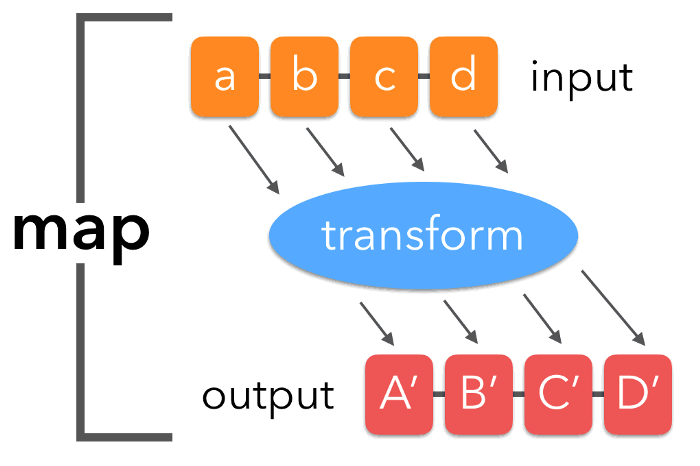
Python’s map function is a powerful tool for applying a specific function to every element within an iterable, such as a list or tuple. This concise and efficient approach streamlines code, making it both readable and computationally effective.
Understanding the Mechanics:
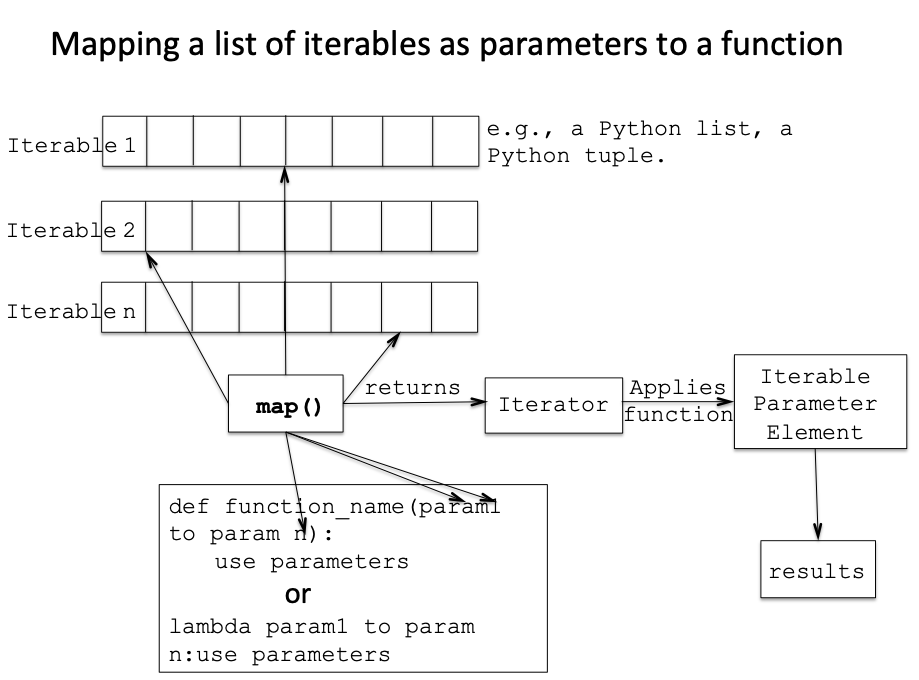
The map function takes two arguments:
- A function: This is the operation you want to apply to each element of the iterable.
- An iterable: This could be a list, tuple, string, or any other object that can be iterated through.
The function then returns an iterator, which yields the result of applying the specified function to each element of the iterable.
Practical Examples:
1. Squaring Numbers:
numbers = [1, 2, 3, 4, 5]

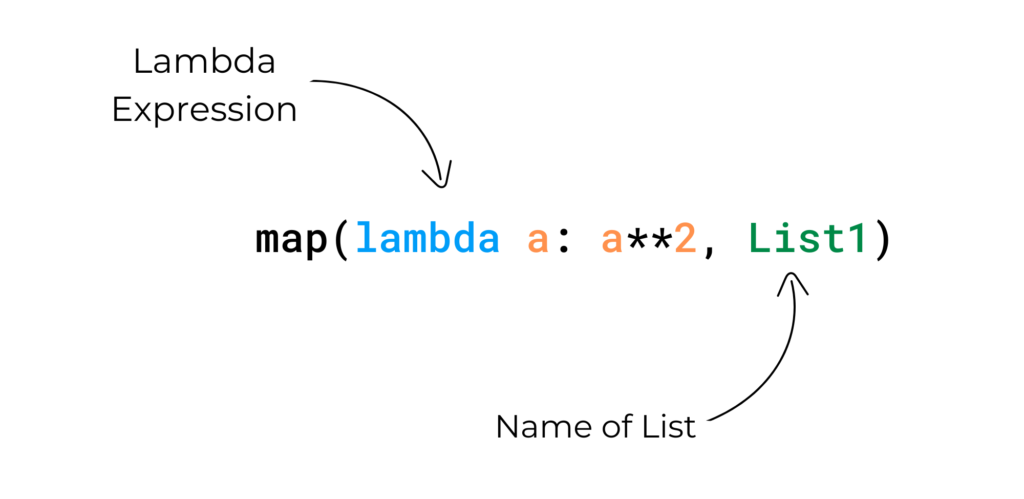
squared_numbers = map(lambda x: x**2, numbers)

print(list(squared_numbers))  # Output: [1, 4, 9, 16, 25]
In this example, the lambda function squares each number in the numbers list. The map function applies this function to each element, creating an iterator that yields the squared values. We then convert this iterator into a list for display.
2. Converting Strings to Uppercase:
names = ["john", "jane", "peter"]

uppercase_names = map(str.upper, names)

print(list(uppercase_names))  # Output: ['JOHN', 'JANE', 'PETER']
Here, the str.upper method converts each string in the names list to uppercase. The map function applies this method to each element, generating an iterator containing the uppercase versions.
3. Applying Custom Functions:
def double_and_add_one(x):
  return 2 * x + 1

numbers = [1, 2, 3, 4, 5]

modified_numbers = map(double_and_add_one, numbers)

print(list(modified_numbers))  # Output: [3, 5, 7, 9, 11]
This example showcases the flexibility of map. It applies a custom function double_and_add_one to each number in the numbers list, effectively doubling each number and adding one.
Benefits of Using map:
-
Conciseness: The
mapfunction provides a compact and readable way to apply operations to multiple elements. -
Efficiency: By utilizing iterators,
mapavoids the creation of intermediate lists, potentially improving performance. -
Readability: The clear structure of
mapmakes code easier to understand and maintain.
Frequently Asked Questions:
Q: Can I use map with multiple iterables?
A: Yes, you can use map with multiple iterables, but the function you provide should accept the same number of arguments as the number of iterables. For instance:
numbers1 = [1, 2, 3]
numbers2 = [4, 5, 6]

sum_pairs = map(lambda x, y: x + y, numbers1, numbers2)

print(list(sum_pairs))  # Output: [5, 7, 9]
Q: What if my function requires additional arguments besides the elements from the iterable?
A: You can use the functools.partial function to create a new function with the additional arguments pre-filled.
from functools import partial

def multiply_by(x, factor):
  return x * factor

numbers = [1, 2, 3, 4, 5]

multiply_by_3 = partial(multiply_by, factor=3)

multiplied_numbers = map(multiply_by_3, numbers)

print(list(multiplied_numbers))  # Output: [3, 6, 9, 12, 15]
Q: Can I use map with nested iterables?
A: While you can’t directly apply map to nested iterables, you can use nested loops or list comprehensions to achieve the desired outcome.
Tips for Using map:
- Choose the Right Function: Carefully select the function you want to apply to ensure it aligns with the desired transformation.
-
Iterate Efficiently: Remember that
mapreturns an iterator, so if you need to use the results multiple times, consider converting it to a list or using it within a loop. -
Embrace Conciseness: Leverage the conciseness of
mapto simplify your code and improve readability.
Conclusion:
Python’s map function provides a powerful and elegant way to apply transformations to elements within iterables. By understanding its mechanics, benefits, and common use cases, you can effectively utilize this function to streamline your code, enhance its efficiency, and improve its readability.




Closure
Thus, we hope this article has provided valuable insights into Unlocking Efficiency: Exploring Python’s Map Function. We thank you for taking the time to read this article. See you in our next article!